Import from GitHub
Overview
Import markdown and text files from a GitHub repository into DataHub as Context Documents. Folder hierarchy is preserved.
By default, imports are Native (editable in DataHub). Switch Document import mode to External for read-only documents linked to GitHub. On DataHub Cloud, you can optionally enable sync-back to push DataHub edits back to the same repository (Native mode).
Prerequisites
- Access to the target repository via the tenant GitHub App (recommended) or a personal access token (read access; write access if using sync-back on DataHub Cloud)
- Permission to manage Data Sources / ingestion in DataHub
Set Up Import
- Open Documents → Import → GitHub.
- Authenticate (GitHub App or personal access token).
- Set the repository, branch, optional path prefix / file extensions, and Document import mode (Native or External).
- Optionally enable Sync edits back to GitHub (DataHub Cloud only — pull request or direct commit, plus conflict policy).
- Save and run (or schedule) the source.
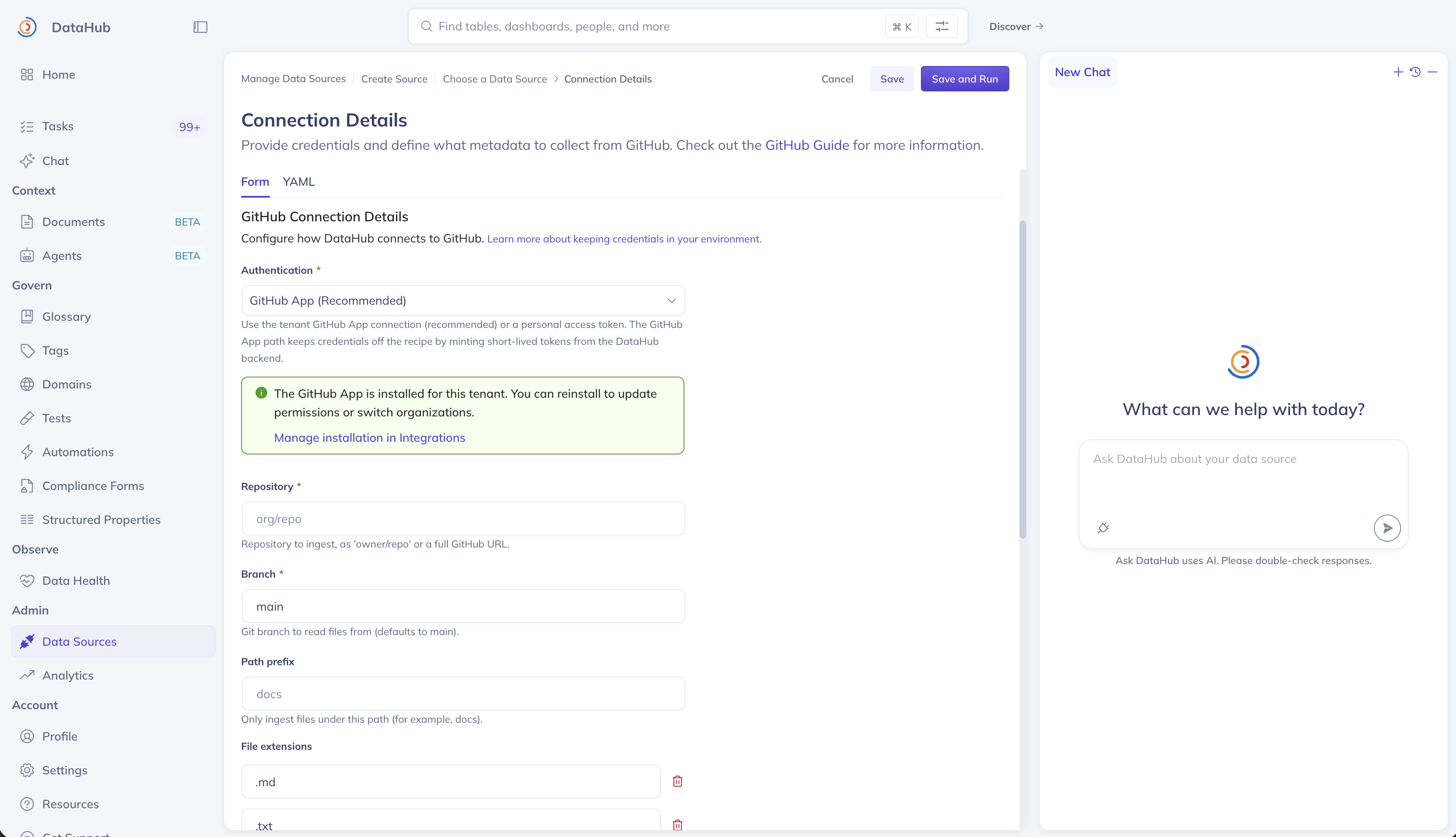
Screenshot: GitHub import / data source configuration (including sync-back options).
Sync-back (optional, DataHub Cloud only)
Sync-back is available only on DataHub Cloud (github-documents-cloud). Open-source github-documents import does not write changes back to GitHub.
When enabled, each run imports from GitHub first, then writes pending DataHub changes back — usually as a pull request (recommended) or a direct commit. Concurrent edits are handled by your conflict policy (merge, DataHub wins, or skip).
View Run History
Open Data Sources (Ingestion) to view runs, schedules, and failures — including sync-back results.
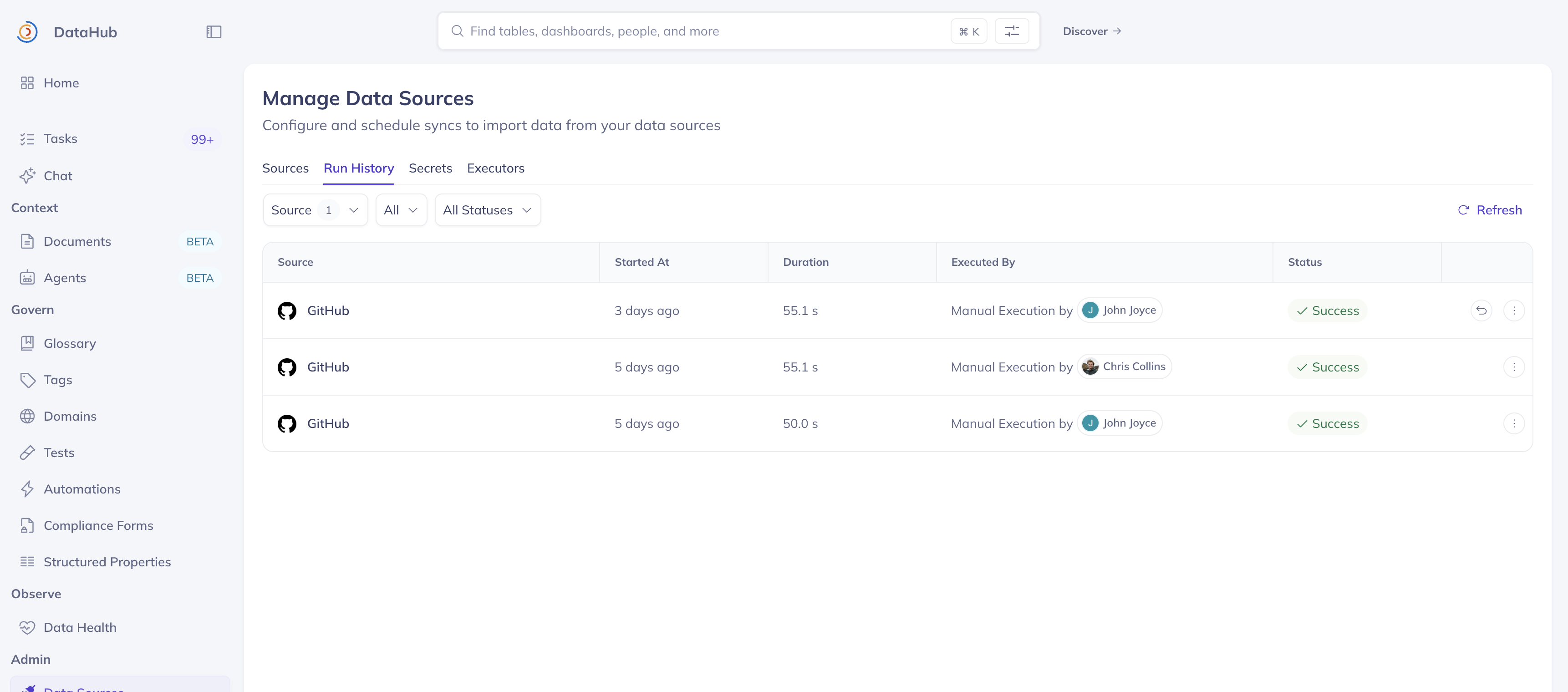
Screenshot: Ingestion / Data Sources run history for a document import source.
Next steps
- Full connector reference: GitHub Documents source
- Back to Context Documents